Chris Terterian

Detroit, MILos Angeles, CA

← All work

Case study · Design systems, built with AI tools

Design System, 2026
  • Design
  • Build
Role

Product Designer (Solo)

Scope

Tokens, components, governance, tooling

Platform

Figma, React, Storybook, GitHub

Open source

GitHub · Storybook · npm

Problem

AI tools can build an interface fast, and they drift from the design system a little at every step.

What I did

Designed and built a design system with AI tools, and wrote its rules as checks those tools have to pass.

Result

A public system: 24 components in two brands, Light and Dark, all passing WCAG AA.

  • 24Components
  • 299Variables, in tiers
  • 4Brand and theme combinations, all WCAG AA
  • 39Decisions written down
Video · The Figma file: cover, brands, Light and Dark, the product card, motion, and page templates

The errors are small, and they compound until review.

Agents that build an interface from a design system drift at every step. Reading the documentation isn’t enough. The agent needs the system’s rules as tools it can check itself against.

  • Drift

    An invented component

    Something that looks right and isn’t in the library.

  • Drift

    A hex value

    A colour typed in where a token should be.

  • Drift

    “Add to cart”

    The system says “Add to Bag”, never “cart”.

The reframe

How might a design system be written so that an AI tool can check its own work against it?

Five decisions, out of the 39 in the log.

Decision 01

The checks say which side moved.

The repository is the source of truth and Figma mirrors it. When they differ, the check compares code now, code at the last match, and Figma, then gives one of four verdicts: Figma is behind, Figma changed, conflict, or unknown.

Why

Someone on LinkedIn asked, “does it ever decide Figma is the wrong side?” It couldn’t. A deliberate design change made in Figma looked like Figma being behind. Now neither side is assumed wrong.
Decision 02

Roles instead of per-component variables.

Six tiers, the same in Figma and code. Components may only use roles and the public scale, and a pre-commit check blocks anything that reaches past them.

569 → 212 variables at the time
Why

Every component had its own collection, and the same decision was declared many times: 58 tokens pointed at one brown. Changing “secondary text” meant finding every copy. After the change, a role change is one edit.

Decision 03

Brand and theme are two separate axes.

A second brand, Tide, sits in its own collection between the raw values and the colour roles. A page picks a brand and a theme independently.

Components didn’t change
Why

Adding “Tide Light” and “Tide Dark” as modes would multiply with every brand and mix two decisions in one dropdown. All 24 promised colour pairings pass AA in all four combinations, checked before anything shipped.

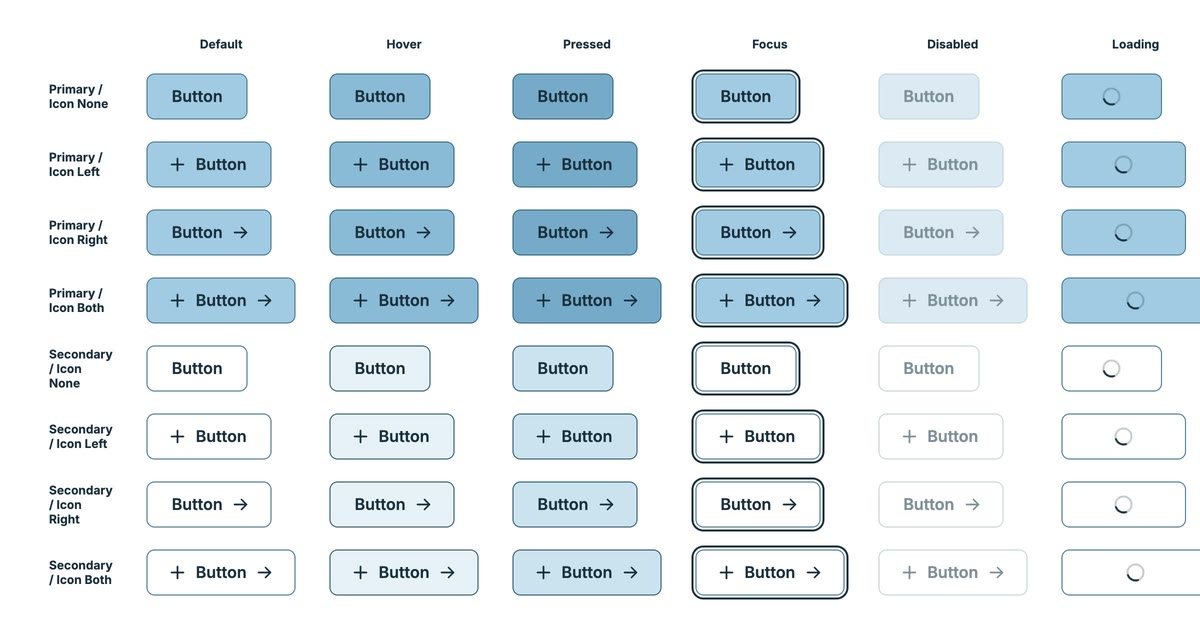
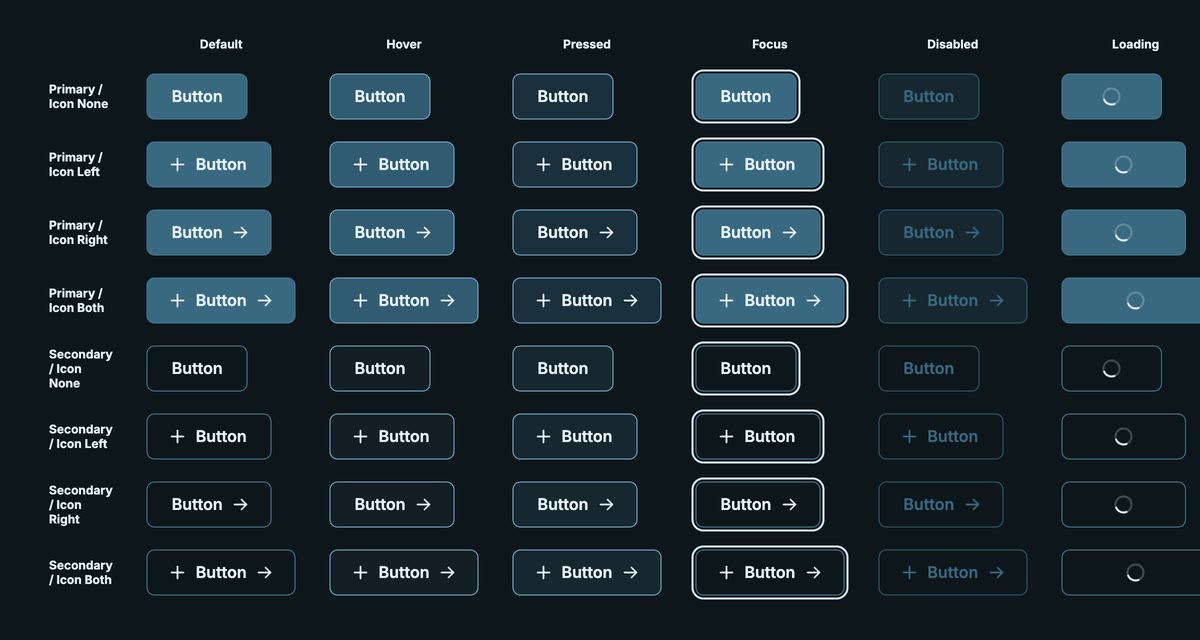
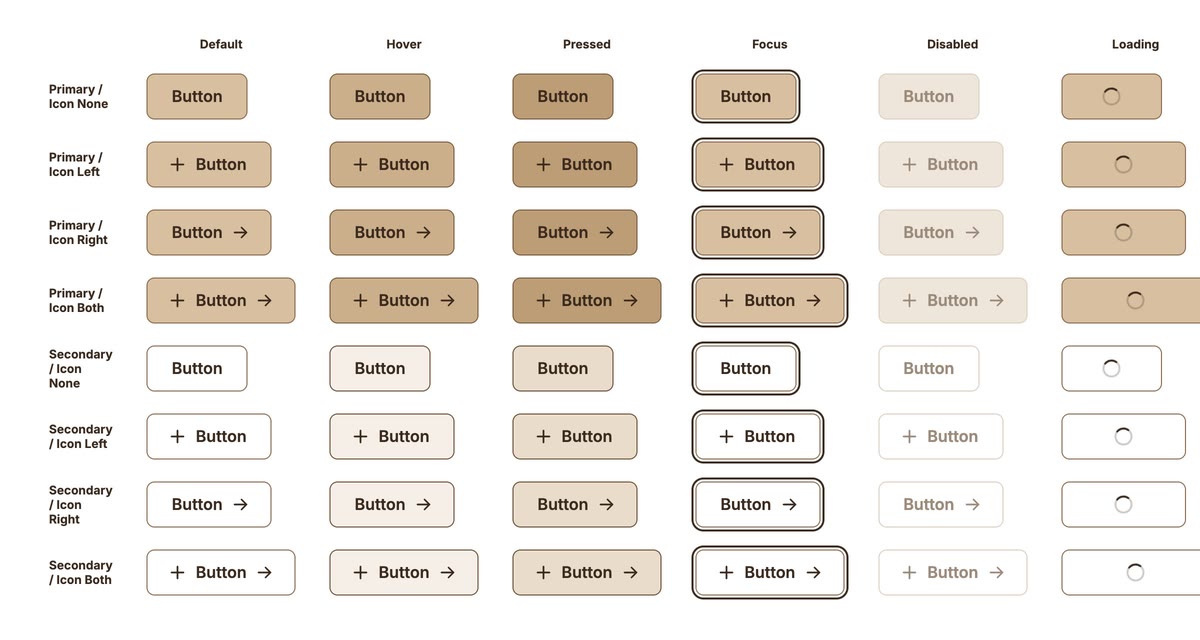
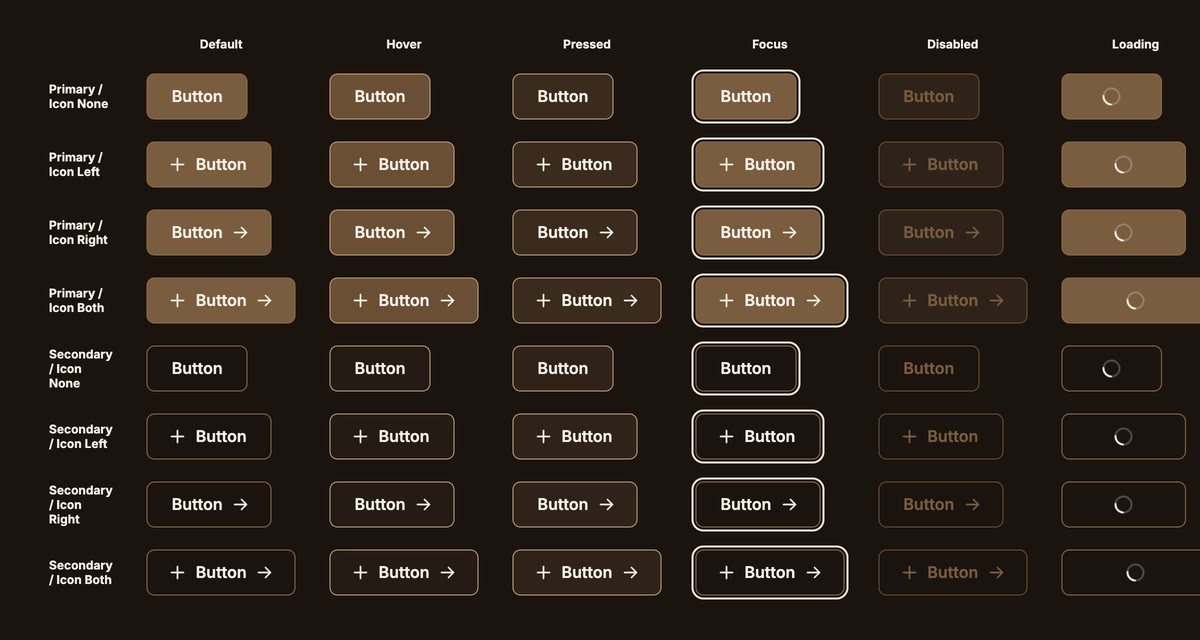
Every button style and state in the Natural brand, Light The same buttons in Natural, Dark The same buttons in the Tide brand, Light The same buttons in Tide, Dark
Every button style and state, four ways: Natural and Tide, each in Light and Dark, from the live Storybook
Decision 04

Motion is tokens.

Seven presets that components pick from. Reduced is a mode, like Dark. Springs are defined by their physics and shared by Figma prototypes and code.

Why

Motion was hardcoded in seven components, each handling reduced motion its own way. A check now opens every story with reduced motion on and fails if anything moves. Its first run caught a mistake in my own design.

Decision 05

The rules are tools an agent can call.

A server gives an AI agent the system’s specs, tokens and checks. Work is split into small steps, each ending at a checkpoint that must pass before the next. A bot turns any failed check into a pull request for a person to review.

Why

The gates blocked a bad deploy, but a red run only said something broke. Now a fix is waiting. Nothing merges or publishes without a person, and the bot can’t make a check pass by weakening it.

  • Voice

    Colour changes by voice

    “Make the sale price darker” becomes a token change, read back first and blocked if any pairing drops below AA.

  • Templates

    Pages are data

    Each page template has a written contract for what its slots accept, checked by the same validator everywhere.

  • Package

    Published on npm

    Under the MIT licence, with a public Storybook.

Every change ships with its evidence.

Each decision in the log has a “How it was proved” entry. The same checks run before every deploy.

  • Accessibility

    428 runs

    Every story checked against WCAG 2.2 AA in all four brand and theme combinations.

  • Figma and code

    457 values match

    Variable values compared one by one when motion shipped.

  • Before and after

    128 stories

    Screenshotted, with 255 price elements measured, when one Price component replaced three.

Two of the decisions came from LinkedIn comments.

I posted the work on LinkedIn as I built it. The question about which side is wrong became the parity verdicts. A question about whether duration and easing should be separate tokens, and how reduced motion is expressed, shaped the motion tokens.

Both are recorded in the decision log with the question that prompted them.

Figma still lags the code in two places.

In code, one Price component serves the product card, the cart line and the product summary. In Figma, the card and cart line still draw their own price layers, because migrating would reset overrides on 167 instances.

The page templates are annotated frames in Figma, not yet components whose slots can be swapped.

A design system an AI tool can build with, and be checked against.

Version 0.18.0, after 27 versions in four weeks. It stays below 1.0 on purpose. The code, the decision log and the Storybook are public.